
Nuthatch Retreat - an eco retreat in Blackney
Our Community Climate Change Adviser, Katie, visited the Nuthatch Retreat and met business owners Nemia and Rod to ask questions about the eco-friendly retreat centre they've created in Blakeney.
Please can you introduce Nuthatch Retreat and share a bit about its background?
Nemia: Nuthatch Retreat was conceived in 2021 when we were thinking about ways that we could create a space for people to come and really immerse themselves in the nature that surrounds us. A space that was accessible, that had good green credentials - we wanted to build in a way that felt sustainable and low impact.
Rod: We worked with fantastic designers/architects called Hills Co. They knew that we wanted an environmentally sensitive building that also broke down the barriers between inside and outside.
What underpinning values or principles guided your decision to create Nuthatch Retreat as an eco-retreat rather than a conventional holiday home?
Nemia: We both come from creative backgrounds, so I think there was something around creating an inspiring space that connected people with the landscape here, but also with the people, with the makers, the farmers, with local food. Connecting with nature was a big one.
We recognise that getting to spend time in this space has a positive impact on well-being, particularly for people coming from the city or urban areas. Our values are around connecting people with the landscape and having minimal impact.
We want to introduce people to the area, to the Forest of Dean, to its history, to all of the available walks and activities around here that allow you to spend time in nature, but also for you to just be. And to look out at that view and kind of reconnect with yourself, and with loved ones that you might be here with and let go of the need to be doing. Also, probably putting down devices as well and just looking out at what's around you.
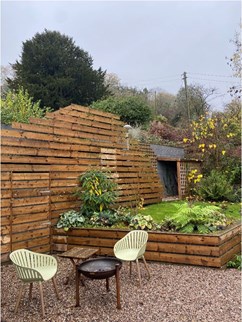
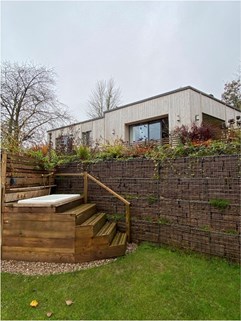
What a beautiful space to do that. We're sat here right now looking out onto the garden. When I first arrived and came into this room, there was a nuthatch right on cue, sitting and eating from the bird feeder outside the window. We're looking at all of these gorgeous autumnal colours as well. It really is a stunning place to be.
What specific eco-friendly design and energy choices were made in building and furnishing the retreat centre?
Rod: We have the hot water and heating supplied from an air source heat pump that feeds down to the underfloor heating. It’s also a very well-wrapped, insulated build, which is itself clad in locally sourced cedar, giving it that lovely kind of warm feeling, and making it sit very softly in the environment here. (Air source heat pumps are direct replacements for gas or oil boilers and absorb heat from the outside air and use it to increase the temperature inside your home).
It's triple-glazed, it's got triple-glazed skylights, as well as windows, and we have made sure we have very efficient white goods as well (fridge/freezers, washing machines etc).
What about future plans?
Rod: We've got quotes now for a battery and solar system so we'll be a lot more energy self-sufficient. We've also got plans in place to harvest more rainwater, so in the dry periods we have our own water to feed the garden. Then we have plans for a green sedum roof that will be installed in the next year or so. (A sedum roof is a type of green roof covered with hardy, drought-tolerant sedum plants that provide environmental, aesthetic, and energy-saving benefits.)
Nemia: A lot of the furniture here we've either repurposed or found second-hand and vintage.
We scoured different suppliers in the local area and a couple of people we know between Bristol and Cardiff have been good at sourcing second-hand furniture for us.
There was a sort of slow evolution of furniture we wanted to use here, over the year and a half of the build. Even with things like bedding, we've tried to use hemp and linen for example, which we know have lower water use in their production. We tried to think about those little things that will all add up.
In the day-to-day running of Nuthatch retreat centre, are there any other environmental considerations that you've put in place?
Nemia: We’ve tried to go for minimal use of single-use plastic, and we're refilling cleaning products using local suppliers. Just looking at the suppliers for the products in our hamper, we have a 21-mile radius of local suppliers that we work with for bread, butter, etc - hopefully trying to reduce the food miles of the things that we're introducing our guests to. We’re also composting raw food waste and have quite clear recycling instructions for our guests, encouraging them and making it as easy as possible.
I'm really keen to know what steps you as an environmentally minded business have taken to reduce water consumption and encourage sustainable use?
Rob: We chose to have a very spacious shower and wet room in the holiday let, which can be more water efficient. It has a sensor in there which triggers the hot water to come quickly from the air source heat pump.
We know people also like to bathe, and we wanted to have an option for bathing outside, but chose not to go with a hot tub. They are popular but use a huge amount of water and chemicals such as chlorine, in addition to those used in cleaning them.
The option we went for is quite a cosy Japanese-style deep soaking kind of tub for two people. It is fed directly from the air source heat pump tank and is very water efficient, or as best as we can get. It’s also well insulated, so it can be used in the deep winter. People love being out there in a kind of quiet space under the stars and surrounded by the tree canopy.
We do water harvesting to help keep the flower beds and the pots watered over the hot spells in the summer and the beds are well dressed so that they can retain moisture. We also have heat-tolerant plants and deliberately planted shrubs that don't need lots of watering.
Nemia: We're also looking to introduce a very small pond just so that it's safe for our younger guests. A small water feature will increase the biodiversity of the gardens and the land here, which sits up against the forestry land.
In terms of future investments, there's a water certification we’re aiming for. We’re looking to do a course and get certified around water usage as well.
We know that travel is one of the largest areas of emissions for our district and can be a large area of a business's impact too. How you encourage guests to choose greener travel options when coming to Nuthatch?
Nemia: We really encourage our guests to travel in active and greener ways. We have an EV charger for those who are fortunate enough to have an electric vehicle.
We're fortunate as well that we happen to be on a bus route that uses one of the electric buses up from Chepstow.
We encourage the use of train routes to Lydney and then connecting to us via The Robin (local bookable bus service) or connecting up with that electric bus from Chepstow as well.
We have a secure bike store tucked away in the corner of the garden so people know that their bikes are hidden away from view.
People are encouraged to bring their bikes here either by train or even if they're traveling with their cars, so that they can then take an onward journey on their bikes around the forest. Because, as we all know, there are amazing bike trails around here to make the most of.
On our website, we also have the FODCAP active travel maps linked so that people can join up the dots of what's available around here.
We also provide local maps so people can connect with the different walking routes close by. We're lucky to be in an area where you can walk straight out the door, and don't need to get in a car.
Finally, I wondered if you had any advice for other small businesses that are looking to try and do more in terms of their environmental efforts or maybe are just starting out or thinking about their impact for the first time.
Nemia: Think local on every level, particularly around your supplies and the things you're introducing your guests to. There are so many great small businesses in the Forest of Dean, whether it's materials, food, or second-hand furniture. Just doing your research in the first place and then taking small steps. You can start by doing an audit of one room, even, or one area of operations within the business and see what you can do to improve your supply chains and think about connecting with other businesses in the area.
Made in Gloucestershire has been great for us, in terms of refocusing on what local food suppliers there are, whether it's growers and farmers or bakers.
Rob: In terms of green energy, conversions or adaptations or new buildings, I'd say there's a lot of great local businesses dealing with solar or air source heat pumps. I think it's important to get advice from other businesses that have installed that type of heating equipment and get recommendations.
I'd say from experience that working with local suppliers is probably a good way to go, because you're building up those relationships and those types of heating systems are complicated, so you need to have that local knowledge and ongoing support sometimes.
Also, I think there are lots of new resources, either from the council climate team or from local business growth organisations. There seems to be more and more focus on sustainability and on energy use. There is loads of support available, whether it's webinars or online resources. That's been really valuable to us recently.
Nemia: We've tapped into the Green Growth Program via Small Business Britain, and each week has focused on a different area. There’s been invaluable advice and support such as being made aware of either funding or resources or other businesses that you can chat to, which helps your green journey - lowering emissions that you're creating as a business.